The Geometry of a Chelsea Pickup: Reading One-Way Streets Before You Book an Airport Cab
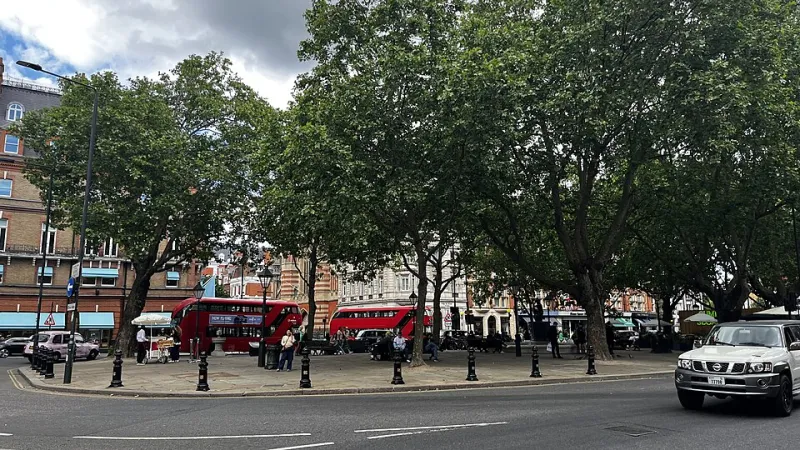
Photo: Bryn Holmes , CC BY-SA 2.0, via Wikimedia Commons
An airport transfer from Chelsea begins long before the car reaches the A4. It begins with a kerb. The map on a booking screen may show a neat line from a Chelsea doorstep to Heathrow, Gatwick or London City, but the street outside has its own opinions. One-way systems, bus lanes, loading bays and the simple matter of which side of the road a passenger can stand on all shape the first ten minutes of the journey. In 2026, the local geometry remains the same: the calmest route is usually the one that respects it.
The shortest line and the wrong kerb
Apps draw straight lines. Chelsea drives in loops. A driver who is sent to an address near Sloane Square may need to pass the door, circle through the one-way streets and return on the correct side. That is not inefficiency; it is the legal road layout. For a passenger with two suitcases and a cabin bag, the difference between the right kerb and the wrong one can be the difference between a composed departure and a scramble across traffic.
This is why a useful booking is more than a postcode. Name the building, the nearest junction and the side of the street where you will wait. If your hotel has a forecourt, say so. If your flat sits on a stretch where stopping is difficult, ask for a pickup point one street away. A short walk to a calmer kerb is often quicker than a long wait for a driver who cannot legally stop where the map suggests.
Sloane Square: approach matters
The one-way arrangement around Sloane Square is one of the first things a Chelsea driver learns to read. The square looks simple from above, but the approach determines where a car can stop, how it can turn and whether a pickup on the doorstep is realistic at a busy time. A driver coming from Knightsbridge may arrive from a different quarter than one coming from the King’s Road or Chelsea Embankment. The passenger sees the same square; the driver sees a sequence of permitted turns.
For visitors, the practical lesson is to choose a landmark rather than a vague address. A hotel entrance, a named side street or a clearly described corner near Sloane Square is easier to manage than a request to meet outside a shop that has several entrances. If you are staying near Sloane Gardens, Holbein Place or Lower Sloane Street, mention the side of the building and whether luggage makes a crossing impractical. Courtesy works both ways: clear information saves the driver a circuit and saves you a wait.
King’s Road: the tempting middle
King’s Road looks like the obvious spine of a Chelsea journey, and sometimes it is. It is also a working high street. Bus lanes, delivery vans, pedestrians, cycle traffic and short-stay loading all compete for the same space. For an airport run, a driver may prefer the Embankment or a quieter side street until the car is west of the busiest shopping stretch. The shortest-looking route is rarely the calmest when the road is doing several jobs at once.
If your pickup is on King’s Road, choose a stretch with a loading bay, a hotel forecourt or a side street where a car can wait without blocking a bus stop. Early morning is usually more straightforward than mid-afternoon. Late evening has its own character, with restaurant traffic and pedestrians who are not thinking about your flight time. A driver who knows the road will often suggest meeting around the corner. That is not a downgrade; it is local knowledge applied to your schedule.
Chelsea Embankment: calmer, but not automatic
Chelsea Embankment is often the better spine for Heathrow and points west. It keeps the river on one side and avoids the stop-start rhythm of the shopping streets. But it is not a magic road. The approaches to Chelsea Bridge, Albert Bridge and Battersea Bridge can queue, and restrictions on some crossings mean your driver may choose a bridge that seems less direct on the map. At peak times, the Embankment can become a queue of its own.
For Gatwick, the southbound shape of the journey matters. A driver may head for Chelsea Bridge and then on towards the A217 and M23 corridor, but the bridge approach can be the deciding factor. For London City, the eastern route through central London or along the Embankment and Lower Thames Street will depend on the hour. The right choice is a conversation, not a default. A good transfer company will ask about your flight time and the time of day before settling on a route.
What to tell your driver when you book
A few details make the geometry work in your favour. Give the exact door and the side of the street. Mention the nearest junction or a recognisable landmark. State how many passengers and how much luggage there is, including anything bulky or awkward. If someone in the party has mobility needs, say so early. If you need a child seat, request it at booking rather than at the kerb. Confirm your flight time and whether you prefer a comfortable buffer or a tighter departure.
It also helps to mention anything local that might affect the pickup: a match at Stamford Bridge, a school run, a delivery window, a street party or building works. You do not need to diagnose the traffic. You simply need to give the driver enough local context to choose the calmest approach. If you are unsure, ask for a pickup point that avoids the busiest stretch. A two-minute walk can remove ten minutes of circling.
A courtesy that saves minutes
The streets behind the schedule are not obstacles to be beaten. They are the local conditions that a reliable airport transfer is designed to absorb. Chelsea Taxis plans pickups with those conditions in mind: the correct side of the road, the sensible approach, the realistic stopping point and the route that suits the hour. The result is not a dramatic shortcut. It is a quieter, more dependable start to the journey, which is usually what a traveller remembers.