A Voice on the Line: Why Chelsea's Airport Runs Still Reward a Human Conversation

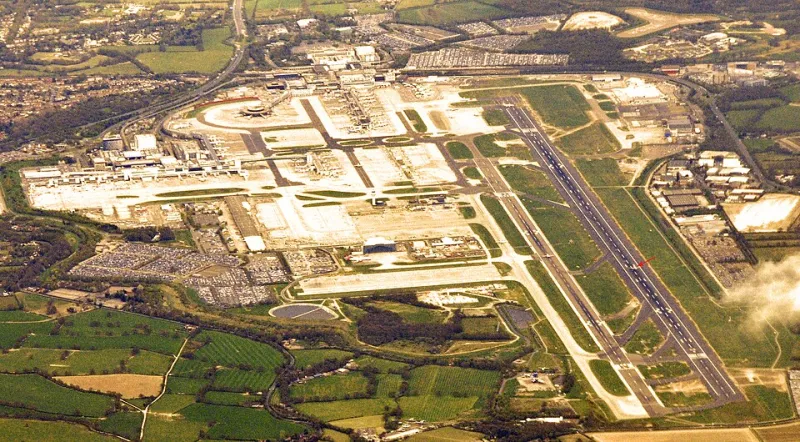
Photo: Ekta Parishad, CC BY-SA 3.0, via Wikimedia Commons
There is a particular kind of comfort in a booking that requires no conversation at all: a tap, a price on the screen, a countdown. Ride-hailing apps have earned their place for short hops across town, and nobody would pretend otherwise. But an airport transfer is a different animal from a trip to a restaurant, and the difference is most visible at the moment something goes wrong.
This is an argument, not a sales pitch. The case for picking up the telephone — or at least corresponding directly with a named operator — rests on a handful of practical points that matter most to people leaving Chelsea at awkward hours with a flight to catch.
Accountability has a name and a number
When a transfer is arranged through a local firm, the passenger is dealing with a business that has a street address, a landline and a reputation in the neighbourhood to protect. If the car does not arrive, the conversation is with the people who dispatched it, not with an intermediary reading a script. In an industry where a missed pickup can mean a missed flight, that distinction is not sentimental; it is operational.
Chelsea is a small enough district that this matters in a very concrete way. An operator who regularly collects from Sloane Square, the King's Road and the mansion blocks off Chelsea Embankment knows which entrances are usable, which streets are coned off for works, and how much time to allow when a match at Stamford Bridge has just finished.
Fixed quotes versus an estimate that moves
App pricing is dynamic by design. In the small hours, or during a downpour, or on the afternoon the Chelsea Flower Show opens in late May, the multiplier can turn a modest fare into a surprising one. A fixed quote agreed in advance is duller but kinder to the traveller on a budget.
Duller still, but relevant: a fixed quote allows a family to plan, a finance team to book travel without a policy exception, and a visitor to know exactly what the journey to Heathrow will cost before they sleep on it.
When the plans change
Airport runs are unusually prone to change. A flight is delayed by two hours; a meeting runs long; a connection is missed and the arrival terminal changes from Terminal 3 to Terminal 5. Handling these adjustments through an app often means cancelling and rebooking at the prevailing price, with a fee attached for the privilege.
A telephone call works differently. A dispatcher who can see the day's schedule can usually move a pickup by an hour, hold a driver back, or send a second vehicle to meet an earlier arrival. The value here is not politeness for its own sake — it is the discretion to solve a problem without a rigid policy getting in the way.
The kerbside is a conversation
Anyone who has stood outside a terminal looking for a car whose registration they misread will recognise the problem. Airport forecourts are busy, short-stay car parks are expensive, and a driver circling the pick-up zone is a driver who will soon be moved on.
A local operator can be briefed properly in advance. Which terminal, which door, which level of the car park, whether the passenger is travelling with a golf bag or a pushchair, and whether they would prefer to be met in arrivals with a name board. These are small details that a text field rarely captures and that a two-minute call settles completely.
Passengers the apps can forget
Accessibility is where the difference is sharpest. A passenger using a wheelchair, travelling with a folding frame, or needing a child seat for a five-year-old cannot simply accept whichever vehicle arrives. Discussing the requirement with a person — and receiving a clear confirmation that the right vehicle has been assigned — removes a genuine risk of being turned away at the kerbside.
Older residents of Chelsea, in particular, often find a conversation easier than a smartphone interface, and they are entitled to a service that does not quietly exclude them.
A fair word about apps
None of this is an argument that ride-hailing has no place. For a short, low-stakes journey in the middle of the day, an app is convenient and perfectly adequate. Nor is every local operator reliable; some are excellent, and some are not, and the trade is not regulated by charm. The point is narrower than that: for a high-stakes, time-critical journey with luggage, the ability to speak to a named person before and during the trip is worth something measurable.
How to judge an operator
A few questions separate a professional service from a merely available one. Can they quote a fixed price in writing? Do they confirm the booking in advance and send driver details? Do they answer the telephone outside office hours? Can they describe, without prompting, where they will meet you at Terminal 2?
If the answers are yes, the arrangement is sound. If the only route to the company is a chat window that closes when the job is done, the passenger is carrying the risk alone.
The telephone has been declared obsolete many times. For an airport transfer at half past four in the morning, it remains a remarkably good piece of technology.