Mileage Is Not the Measure: How a Chelsea Airport Cab Chooses Its Route West

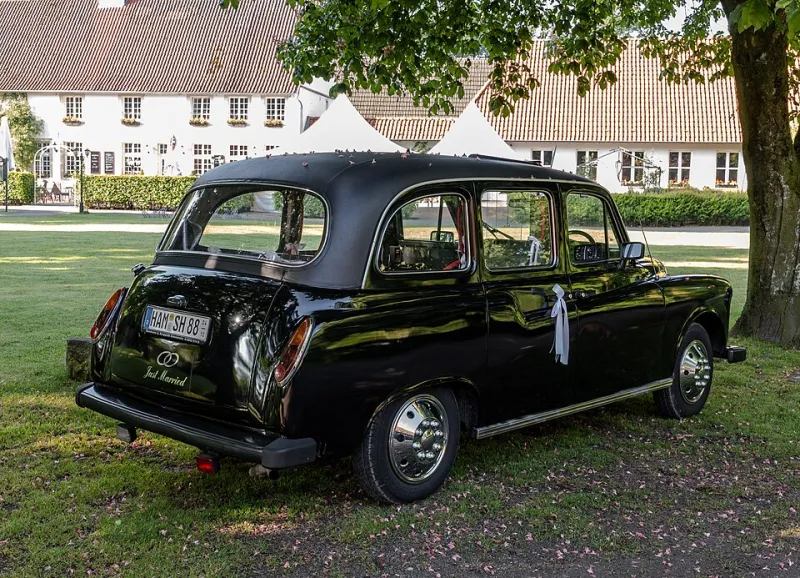
Photo: Larry Lamsa, CC BY 2.0, via Wikimedia Commons
There is a moment on every airport run, usually somewhere between Sloane Square and the river, when a journey stops being an address and becomes a judgement. Two sensible roads lead west. One is broad, familiar and heavily used. The other is quieter, slower in theory and occasionally much faster in practice. Choosing between them is the part of a transfer that no booking form can capture, and it is the part that most reliably decides whether the morning feels calm or hurried.
Two Instincts, One Departure
A route planner works in miles and averages. A driver works in minutes and probabilities. The two rarely disagree by much across an entire year, but they disagree often enough on individual mornings to matter. A passenger looking at a screen will see the shortest distance and assume it is the answer. A driver looking at the same screen will see the shortest distance, note the time of day, remember that a school on the route lets out at half past three, and quietly choose the longer road.
This is not mystique. It is the ordinary application of local knowledge to a city that changes character four or five times a day.
The Case for Cromwell Road
For most departures from Chelsea, the spine of the journey west is Cromwell Road and its continuations: Talgarth Road, the Hammersmith Flyover, the Hogarth Roundabout and then the M4. It is the default for good reason. It is direct, it is legible, and once past Hammersmith it becomes a genuinely fast road rather than a sequence of junctions.
On a weekday morning before seven, this is almost always the answer. The same is true late at night, when the traffic lights seem to cooperate and the flyover is empty. For Heathrow in particular — especially Terminals 2 and 3, and Terminal 5 via the M25 — the Cromwell Road corridor offers the simplest line and the fewest unknowns.
Its weakness is well documented and entirely predictable. The stretch around Earl's Court is sensitive to almost everything: roadworks, delivery vehicles, events at the exhibition centre, and the general compression that occurs when several lanes of traffic attempt to become two. When it goes wrong, it goes wrong slowly.
When the Embankment Earns Its Place
Chelsea Embankment is the quieter alternative, and it is quieter for a reason. It is narrower, it is residential, and it will never be the fast road. What it offers is consistency. Running east to west along the river, it avoids the commercial congestion of the Cromwell Road entirely and delivers you towards Battersea, Wandsworth and ultimately the A3 or the M3.
That makes it the natural choice for Gatwick, where the southern route via the A3 and M25 often beats anything that begins by heading north-west. It is also useful on afternoons when the Cromwell Road is fully occupied and the river road is merely busy.
Between the two extremes sits King's Road and its neighbours — Oakley Street, Beaufort Street, Battersea Bridge Road. These are not so much a route as a set of connectors, allowing a driver to move between the northern and southern strategies as conditions change. Used well, they are the reason a Chelsea pickup can be genuinely flexible.
The Clock Matters More Than the Compass
Time of day does more to shape the decision than any other single factor.
Between roughly 06:00 and 07:00, the Cromwell Road is at its best and there is little reason to deviate. From 08:00 to 09:30 the school run and the commuter peak combine, and the river route becomes markedly more attractive for anything heading south. The middle of the day is unpredictable in a mild way: rarely disastrous, rarely quick. The afternoon peak from 15:30 onwards brings the second school movement, and the stretch around South Kensington can slow to a crawl for reasons that have nothing to do with volume.
Evenings after 19:00 restore the Cromwell Road to something close to its intended purpose. For late-night departures — the ones that require leaving Chelsea at three in the morning — the question is almost academic, and the direct road is nearly always correct.
School Runs, Roadworks and the Unannounced
Chelsea's term dates are not a secret, and a driver who works the area regularly will know them without consulting anything. What matters is not the school itself but the surrounding twenty minutes: the double-parking, the parents turning across traffic, the pedestrian crossings filling in waves.
Roadworks are the other recurring variable. Utility works appear with modest notice and disappear on their own schedule, and a lane closure on the Talgarth Road can add fifteen minutes without warning. The value of a driver who has been through the area that morning, or who has spoken to a colleague coming the other way, is difficult to overstate.
The Destination Changes the Question
It is worth remembering that the route west is not a single decision but four or five of them, depending on where the aircraft is parked.
Heathrow rewards the Cromwell Road and M4. Gatwick usually rewards the southern line via the Embankment, Battersea and the A3. London City sits in the opposite direction entirely, and the conversation turns to the Embankment eastbound, Blackwall and the A13. Luton and Stansted involve the M25 and a judgement about which side of it to join.
A passenger who books a cab knowing only "the airport" is not being unreasonable, but a driver who asks which terminal is being sensible. Terminal choice can alter the route by several miles and, on a bad morning, by a good deal more.
What a Passenger Can Reasonably Do
There is little to be gained from directing the route from the back seat, and quite a lot to be lost. The useful contributions are simpler: be ready at the stated time, have the terminal and flight number to hand, and mention anything that might affect the pickup — a closed road, a building entrance that is not on the main street, a lift that is out of order.
Beyond that, the work is best left to the person holding the wheel.
A Modest Conclusion
The shortest distance between Chelsea and an airport is a number. The quickest is a judgement, made afresh each morning with one eye on the clock and the other on the road ahead. Cromwell Road or the Embankment is not a riddle with a permanent answer. It is a small, ordinary decision, taken well, and then quietly forgotten — which is precisely how a good transfer should feel.