Before the City Wakes: Overnight Airport Transfers from Chelsea, Step by Step
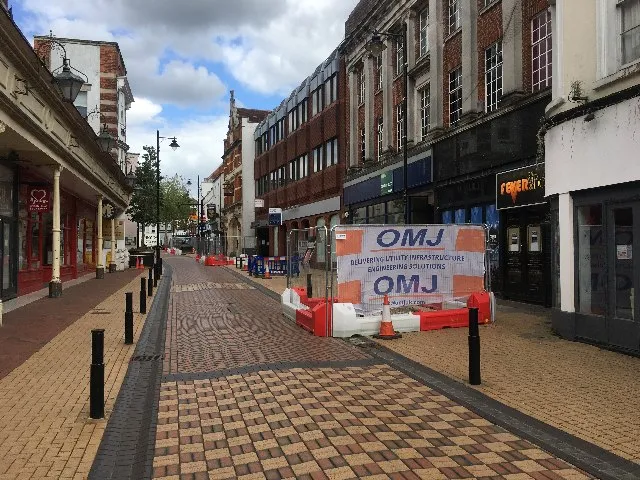
Photo: Mr Ignavy , CC BY-SA 2.0, via Wikimedia Commons
An airport run that begins at four in the morning asks more of a passenger than one that begins at four in the afternoon. The streets are empty, the Underground is closed, and the usual safety nets — a spare hour, a busy rank, a colleague who can drive — are quietly unavailable. For a first-time visitor, a family with young children, or a business traveller catching an early flight, a little forethought removes almost all of the anxiety.
Why the small hours behave differently
Between roughly 11pm and 5am, London changes character. Traffic volumes fall away sharply, so journey times become shorter but also less forgiving: a single road closure or a late roadworks crew can send you the long way round with no queuing traffic to absorb the delay. Taxi availability thins out as well, and the night bus network is a poor substitute when you are carrying two suitcases and a car seat.
The practical conclusion is straightforward. Pre-dawn transfers reward booking ahead and allowing a margin, and they punish improvisation.
Working backwards from your flight
Most airlines ask long-haul passengers to arrive three hours before departure and short-haul passengers two hours; bag drops typically close an hour before, and boarding gates considerably earlier. From that figure, subtract the drive, then add a buffer of twenty to thirty minutes for the unexpected.
A worked example is useful. For a 07:00 departure from Heathrow Terminal 5, you would aim to be at the terminal by 04:00. A car leaving Chelsea at 03:20 should comfortably manage it, which means collecting you at 03:10 — and setting an alarm for 02:30.
Approximate overnight journey times from Chelsea, under normal conditions:
- Heathrow — 13 to 16 miles, generally 30 to 40 minutes via the A4 and M4.
- Gatwick — 27 to 30 miles, 55 to 70 minutes, usually via the A3 and M25 or the A23 through south London.
- London City — 9 to 10 miles, 30 to 40 minutes, dependent on the Blackwall Tunnel.
- Luton and Stansted — considerably further; allow 70 to 90 minutes and check the motorway network before you sleep.
The kerbside before dawn
Chelsea is a residential district first and a departure lounge second, and the neighbours notice. A few habits keep the peace. Ask the driver to switch off the engine while waiting rather than idling under a bedroom window. Close doors firmly rather than slamming them. Have cases ready in the hallway the night before, so that the pavement is occupied for two minutes rather than ten.
Mansion blocks, garden squares and gated courts each have their own logic. Tell your operator in advance about entry codes, night porters, courtyard access or narrow service roads, and ask the driver to meet you at the building entrance rather than at the corner. On streets with residents' bays and red routes, a car that cannot stop legally will circle the block; a passenger who has described the doorway precisely will not have to.
Cobbles and stone paving are unforgiving to wheeled luggage at three in the morning. If you can, carry rather than drag.
Staying in touch with your driver
A courteous operator will confirm the booking the day before and send the driver's name and mobile number the previous evening. Save the number. If you are travelling with a party of six across two cars, agree in advance who holds the contact for each vehicle.
On the night, a short message when you are awake and dressed — rather than a call at the moment of departure — gives the driver useful warning. If your building has poor mobile reception in the lobby, arrange to be reachable by the time you reach the street door.
The roads themselves
The A4 and M4 corridor to Heathrow is usually quiet overnight, though there are periodic overnight closures for maintenance on the Chiswick and Hammersmith stretches. Gatwick is a longer haul: whichever route is chosen, the M23 spur is the final common approach, and roadworks on the M25 can add fifteen minutes without warning. London City is closest but not always quickest; the Blackwall Tunnel is frequently closed overnight for planned works, in which case a sensible driver will take the Rotherhithe crossing or route through the City.
Two charges are worth remembering. The Congestion Charge does not operate overnight, so an early departure avoids it entirely, while the Ultra Low Emission Zone applies around the clock — a further reason to book a compliant vehicle rather than flag down whatever appears.
If something goes wrong
Flights are moved forward, hotels mislay wake-up calls, and passports are discovered in the wrong bag. The remedy is a telephone call to the operator as soon as the problem is known, not an email. A reputable firm will re-time a pickup or send a second car; a dispatcher who answers the phone at 03:00 is worth more than a discount.
A short pre-dawn checklist
- Bags packed and by the door the night before.
- Booking confirmed, driver details received, mobile number saved.
- Boarding passes downloaded, so no reliance on airport wi-fi.
- A twenty-minute buffer built into the plan, and a further ten if travelling to Gatwick.
- Doorway and access details passed to the operator.
- Payment settled in advance where possible, so the kerbside handover is brief.
None of this is complicated, and none of it takes more than a quarter of an hour. It simply has to be done before the alarm goes off.