Before the Boot Opens: A Chelsea Traveller’s Guide to Airport Cab Luggage
Airport luggage has a way of multiplying between the bedroom and the kerb. A weekend bag becomes a weekend bag plus a laptop case, a duty-free tote and, somehow, a coat that seemed essential at five in the morning. For anyone leaving Chelsea for Heathrow, Gatwick or London City, the most useful five minutes you can spend before booking a cab are not on a packing list but on a luggage audit.
A short, honest assessment of what is actually travelling — not what you hope to carry — will determine whether a saloon is sufficient, whether an estate or MPV is the sensible choice, and whether an awkward item needs to be mentioned at the time of booking rather than at the door. It is a small courtesy to the driver and a considerable kindness to yourself.
Start with a five-minute audit
Place every item in one room and look at it with a stranger’s eye. Count the hard-shell cases, the soft holdalls and the cabin bags. Note the longest item, the heaviest item and anything that does not stack neatly. Ask whether each passenger can lift their own bag into a boot, and whether a pram, child seat, golf bag or pair of skis will be joining the party. This is not an exercise in minimalism; it is simply an accurate description of the journey ahead.
The audit should also include the return leg. A traveller leaving Chelsea with one cabin bag may return with two suitcases and a box of presents. If that is likely, book for the return journey you will actually make, not the tidier one you imagine.
What a saloon can carry comfortably
A standard saloon is an excellent choice for one or two passengers with a sensible amount of luggage: two medium cases in the boot, with cabin bags and coats in the back. It is less suitable for four passengers with four large cases, or for a family whose pram takes up more space than expected. The word to keep in mind is comfortably. A boot can sometimes be forced shut, but a journey that begins with a reshuffle at the kerb rarely feels calm.
Boot shape matters as much as boot volume. A soft holdall will mould itself around corners; a rigid case will not. If you are travelling with a mixture of both, say so when booking. The driver can then judge whether the vehicle is right before arrival.
When an estate or MPV earns its keep
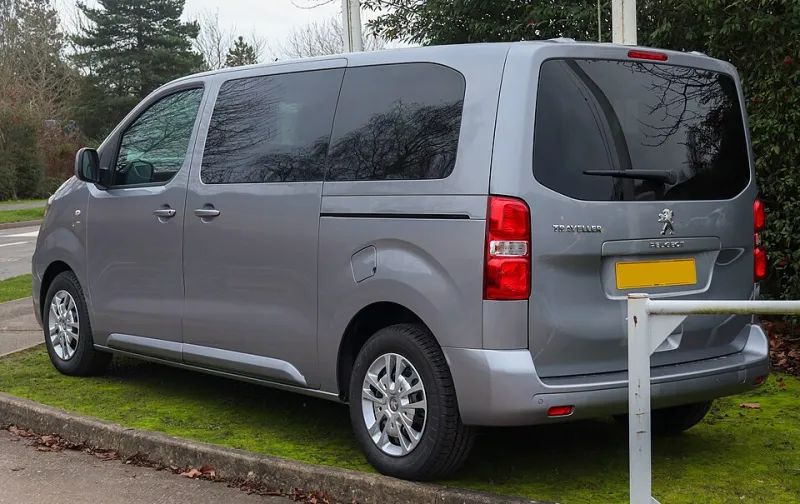
Larger families, long airport shopping trips and parties with multiple cases are usually better served by an estate or an MPV. An MPV offers height and a flexible seating arrangement, which is helpful when passengers and luggage must share the same space. An estate can be useful for longer items, though it is not a substitute for a van if the load is genuinely bulky.
It is worth remembering that every extra seat reduces luggage capacity. A seven-seat vehicle carrying seven people will not also carry seven large suitcases. If your group is at the upper end of the vehicle’s capacity, be explicit about the number of bags. The right answer may be two vehicles rather than one overfilled one.
Golf clubs, skis and other long items
Golf clubs, skis, snowboards and musical instruments deserve a sentence of their own. They are rarely impossible to carry, but they are often awkward, and they need to be declared. Mention the length, the weight and whether the item is in a hard case. A set of golf clubs in a slim travel bag is a different proposition from a ski bag that stretches across the boot.
Mobility aids and folded wheelchairs should also be discussed at booking, not on the day. A courteous operator will ask the right questions and allocate a suitable vehicle. If an item is heavy or requires two people to lift, say so; it is not an imposition, it is planning.
Prams, child seats and family journeys
A pram is one of the most common causes of kerbside surprise. Travel systems fold, but they do not disappear. If you need the pram at the destination, it must travel with you, and the vehicle must have room for it alongside the cases. If you require a child seat, request it when booking and confirm that it is suitable for your child’s age and size. Not every vehicle carries child seats as standard, and a little notice makes a great difference.
Families should also think about the practicalities of arrival. At a busy terminal, it is far easier to unfold a pram once the luggage has been unloaded than to juggle a child, a cabin bag and a folded frame at the same time. A well-matched vehicle makes that moment possible.
How to describe awkward luggage when booking
Use plain measurements and plain numbers. Two large hard-shell cases, one cabin bag and one folded pram is more useful than a great deal of luggage. A golf bag measuring about a metre and a half is more useful than clubs. If you are booking online, put the details in the notes; if you are speaking to someone, ask them to read the list back to you. A good booking is a short, clear conversation, even when it happens in writing.
Why kerbside chaos is best avoided
Heathrow, Gatwick and London City all have their own rhythms, and none of them is improved by repacking a boot while a traffic marshal looks on. Drivers allow time for loading, but they cannot create space that is not there. The wrong vehicle means delay, discomfort and, at the busiest times, a less pleasant start to the day. A five-minute audit at home is a small price for a smoother kerbside.
A final check before you book
The best airport cab is not always the largest one; it is the right one. Count the bags, measure the awkward items, mention the pram and the child seat, and be honest about the return journey. Chelsea’s streets can be narrow and its doorways can be modest, so a vehicle that fits the luggage but not the address is no use at all. With a little foresight, the boot opens, the cases fit, and the journey begins as it should: quietly, courteously and on time.