Step-Free from the Doorstep: Planning an Accessible Airport Cab from Chelsea
An airport transfer is only as smooth as its least certain moment. For travellers with mobility needs, that moment often arrives before the vehicle does: a narrow Chelsea pavement, a flight of steps inside a mansion block, a wheelchair that must be secured safely, or an airport assistance desk that needs to know precisely when you will arrive. Planning an accessible cab is therefore less about choosing a vehicle and more about removing uncertainty, one detail at a time.
Begin with the conversation, not the vehicle
A accessible airport transfer should start with a straightforward discussion about the journey. The useful questions are practical rather than medical. Will you remain in your wheelchair for the journey, or transfer to a seat? Is the chair manual or powered? What are its approximate dimensions and weight? Do you use a walking frame, crutches or a mobility scooter that must travel with you? Will a companion be travelling, and will they need space beside you?
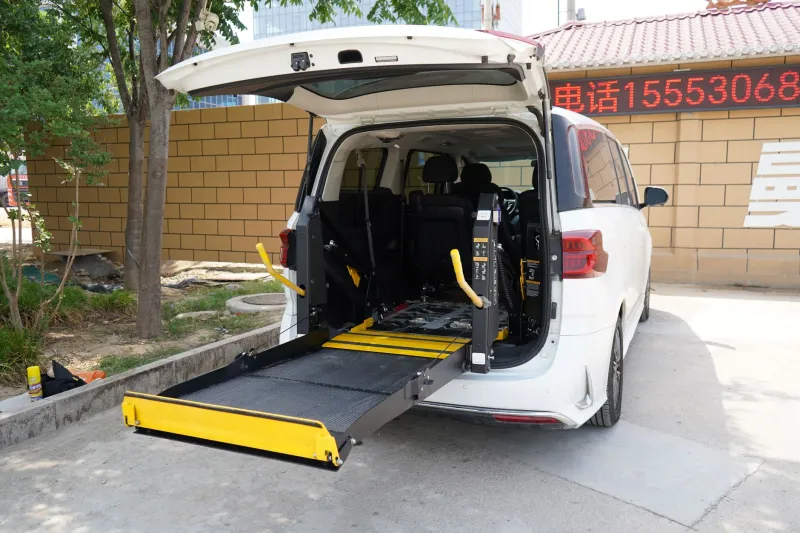
These details allow an operator to match the right vehicle to the journey rather than offering a generic accessible cab. A wheelchair-accessible vehicle with a ramp or lift is not automatically suitable for every chair, and a saloon car with a swivel seat may be better for a traveller who can transfer with assistance. Clear information at the booking stage prevents awkward adjustments at the kerbside.
It is equally helpful to describe the access at both ends of the journey. In Chelsea, that may mean a mansion block with a porter, a period building with a shallow step, a hotel entrance on a busy stretch of King's Road, or a house with a narrow front path. Mention lifts, thresholds, gates and any parking restrictions. If the driver cannot reach the door, you should know in advance where the vehicle will wait and how far you will need to travel to reach it.
Questions worth settling before you book
A well-planned booking is built on confirmation, not assumption. Before you commit, ask whether the vehicle is fully wheelchair accessible and whether the ramp or lift has a safe working load suitable for your chair. Confirm whether the driver is able to assist with luggage and with boarding, and be clear about what assistance you require. A professional driver can help with bags, doors and the ramp; personal care and medical assistance should be arranged separately.
Ask where the driver will meet you. At a Chelsea address, the answer might be the main entrance, the concierge desk or a nearby side street. At the airport, it should be a specific drop-off point, not simply the terminal name. If you are travelling with a companion, confirm that they are included in the booking and that the vehicle has sufficient seating. If you use a folding wheelchair or scooter, confirm that it can be carried safely and that the luggage capacity remains adequate.
Finally, ask for the details in writing. A short confirmation email or message setting out the pickup time, address, vehicle type, driver contact and any assistance notes is more reliable than a telephone conversation remembered under pressure. It also gives you something concrete to check on the day before departure.
Matching the vehicle to the airport
Heathrow, Gatwick and London City each present a different final approach. Heathrow’s terminals are large and busy, and the distance from the drop-off point to the check-in hall can be considerable. Gatwick has its own internal transport links between terminals and check-in areas. London City is more compact, but its layout and kerbside arrangements still reward a little forethought.
When booking, say which airport and terminal you are using, and ask the operator to confirm the closest suitable drop-off point. If you have booked airport assistance, the airport may specify a particular meeting point or entrance. Share that information with the cab company so the driver can aim for the right place rather than the nearest convenient kerb.
Airport assistance: time it rather than hope for it
Airport special assistance is usually arranged through the airline or the airport itself, and it should be requested well before travel. The exact process varies, but the principle is consistent: the airport needs to know that you are coming, what assistance you need and when you expect to arrive. Confirm the terminal, the assistance meeting point and whether you should go directly to a designated desk or wait for staff at the drop-off area.
Build a generous buffer into the journey. An accessible transfer may take slightly longer to load and unload, and airport assistance can be in high demand at peak times. That does not mean arriving unnecessarily early, which can be tiring in its own way. It means agreeing a pickup time that allows for the vehicle, the luggage, the terminal and the assistance process without turning the morning into a race.
If you are travelling with a companion, agree in advance who will speak to the driver and who will manage the airport paperwork. A single point of contact keeps the handover calm.
A calm departure day sequence
On the day, keep the essentials close: medication, documents, phone charger and any assistance confirmation in a bag you can reach without unpacking the boot. Confirm the driver’s arrival shortly before the pickup time, and make sure your phone is charged. When the vehicle arrives, take the loading process steadily. The driver should secure the wheelchair or stow the mobility aid safely, and you should feel able to ask for a moment if something is not right.
At the airport, the handover from cab to assistance staff should be just as clear. Confirm the terminal, the desk and the next step. If you have arranged assistance, ask the driver to drop you at the agreed point and, where appropriate, to alert staff to your arrival.
An accessible airport cab from Chelsea should not feel like a specialised operation. It should feel like an ordinary journey that has been thought through properly: the right vehicle, the right questions, the right timing and a courteous handover. When those details are settled in advance, the journey from doorstep to departures becomes notably quieter — and that is the standard any traveller with mobility needs should expect.